


The ROVA project aims to support Roma and pro-Roma civil society to become more effective and resourceful in their promotion of EU values. The project will support 120 local Roma and pro-Roma civil society organisations and 15 national Roma coalitions in Spain, Hungary, Romania, Bulgaria, Czech Republic, Slovakia and across the EU through grants and […]
The aim of the programme was to promote the rule of law, democracy and fundamental European values by supporting civil society organisations. To this end, we supported cohesive and active communities that used campaigns and initiatives to encourage civic participation, so that everyone in Hungary could enjoy the rights to which they are entitled, play a part in shaping their own lives, and have a say in our shared affairs.
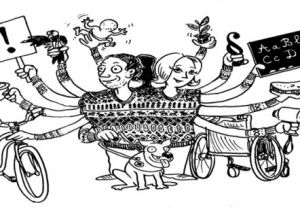
The overarching objective of the EEA and Norwegian Civil Society Fund (NCTA) was to “support the development of civil society in Hungary and strengthen its participation in shaping social justice, democracy and sustainable development.” To this end, the Fund provided support for projects developed across seven thematic areas, of which Autonómia was responsible for the themes of empowering socially vulnerable groups and the welfare services provided to them.
Our foundation was established almost at the same time as post-communist Hungary. It was the first independent foundation to be set up with a mission to promote Roma integration and support civil society organisations.
In 2015, to mark our 25th anniversary, we used a variety of professional programmes to showcase our work and the current state of Roma integration in Hungary.
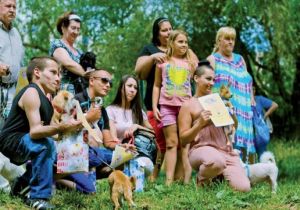
The Swiss–Hungarian Civil Society and Scholarship Fund operated between 2012 and 2015, focusing specifically on strengthening the civil society sector and supporting disadvantaged students. Over the course of three years, 111 projects were implemented with funding of more than 1.3 billion forints: of the 102 civil society projects supported, 67 were in the field of social services and 35 dealt with environmental protection. Under nine scholarship programmes, 679 disadvantaged students received support.
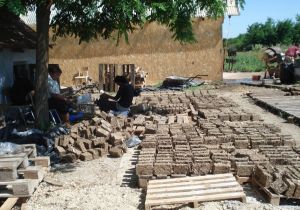
We launched this service as a complement to our ‘EU Funds for Roma Integration’ project development programme, with the aim of facilitating the successful implementation of projects submitted through it. The service consisted of two elements: mentoring support and – where necessary – supplementary support. We made access to the service conditional on meeting a total of eight criteria.
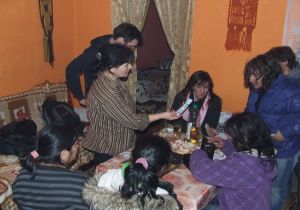
2011 December 31 — 2013 October 31
Pilot projects in four different European Union Member States aimed to promote small-scale savings among low-income households. The Hungarian SIMS project implemented, tested and compared three different financial, educational and development methods: CAF, Esélykassza and IDA. As part of this, we explored the possibilities for adapting the CAF method, which was previously unknown in Hungary.
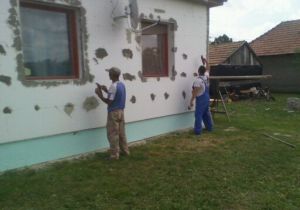
The aim of the programme was to strengthen financial awareness and more systematic budgeting in low-income households. The programme was based on the IDA method, which is popular in the United States: participants saved money on a monthly basis in their own bank accounts, and this was matched by a grant of the same amount, helping them to achieve their savings goals. A condition for receiving the grant was participation in the financial training sessions that formed part of the programme.
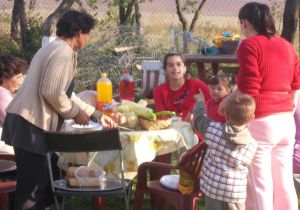
2008 October 31 — 2009 November 30
The aim of the Opportunity Fund (Esélykassza) programme was to develop and test an approach – previously unused in Hungary – that combines financial, educational and development methods, with a view to strengthening the financial literacy and more systematic household management of households living in extreme poverty in small settlements. The programme was implemented by Autonómia, with Mikrohitel Zrt. involved in the management of the financial activities.

The Autonómia Foundation, in cooperation with the Ökotárs Foundation, the Foundation for the Development of Democratic Rights and the Carpathian Foundation-Hungary, managed the EEA/Norwegian Financial Mechanism Civil Society Support Fund, which supported Hungarian civil society organisations in four thematic areas: environmental protection; capacity building for civil society organisations; social cohesion, child and health protection; and cultural heritage.
2005 November 30 — 2008 November 30
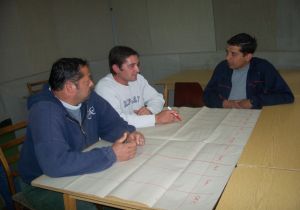
In the project in Bonyhád, we tested the IDA (Individual Development Account) method, which aims to strengthen financial awareness and planning in low-income households. Participants who saved regularly each month into their own bank accounts received a so-called supplementary grant at the end of the savings period, and also took part in training sessions designed to improve their financial and legal knowledge.
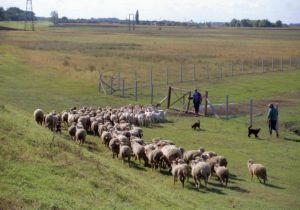
As a continuation of our programmes ‘My Own Kitchen Garden’ and ‘Horticulture 2000’, we launched a new, three-tier development programme in 2000, creating opportunities for Roma communities and organisations to establish independent economic activities. The aim of the grant scheme was to enable the supported organisations to implement the economic activities they wished to pursue in a sustainable manner over the long term, through several years of professional development.
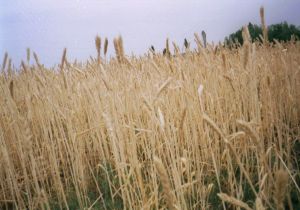
The initiative supported projects that simultaneously contributed to improving the environment and expanding local employment. One of the programme’s most important outcomes was that it succeeded in linking environmental protection with social inclusion, which improved perceptions of the Roma population in several settlements and strengthened cooperation between communities.
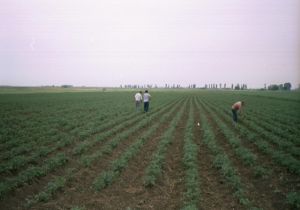
In our Horticulture 2000 Programme, we supported Roma families in becoming independent commercial farmers. The two-year programme provided a comprehensive package of financial resources, expert advice and training: practical agricultural skills, project management and marketing knowledge. The tried-and-tested methods – particularly the training and support model – served as the basis for subsequent development programmes.
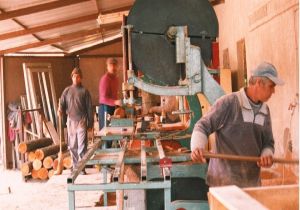
The programme provided assistance to the economic enterprises of Roma organisations: it supported organisations that had already successfully completed training courses and wished to provide business or employment opportunities for participants, or were developing their existing activities. The support was directed towards the purchase of equipment, the establishment and development of businesses, and business development training.

As part of the project, independently operated community centres were established in seven localities, with the aim of providing services to the Roma population in disadvantaged localities that would contribute to achieving economic and social equality for the group concerned. The centres themselves identified local needs and organised community development and training programmes based on these.

The aim of the project was to enable children and their families living in small settlements with large Roma populations to learn the basics of subsistence-oriented, environmentally conscious farming through theoretical and practical training. The programme involved the creation of school kitchen gardens, where participants grew their own fruit and vegetables, thereby contributing to the provision of food for the school kitchens.

Under the ‘My Own Kitchen Garden’ programme, disadvantaged families were given the opportunity to take up gardening by acquiring quality seeds and plant protection products. During implementation, some 2,890 families took part in the programme with the involvement of 62 organisations. With expert support, participants acquired up-to-date knowledge of gardening and plant protection, and in many cases were tending their gardens for the first time.

The primary aim of our grant programme, which ran until the end of the 1990s, was to strengthen the economic and social autonomy of local civil society organisations, particularly through the promotion of income-generating activities. The programme was based on the premise that initiatives built on collective, productive work contribute to reducing prejudice and fostering cooperation.
Autonómia Alapítvány
1137 Budapest, Pozsonyi út 14. II/9.
Telefon: +36 70 491 1033
Email: autonomia@autonomia.hu
Adószámunk: 19022091-1-41
Bankszámlaszámunk: 11600006-00000000-80724009




1990 – 2026 © Autonómia Alapítvány