

Our foundation was established almost at the same time as post-communist Hungary. It was the first independent foundation to be set up with a mission to promote Roma integration and support civil society organisations.
In 2015, to mark our 25th anniversary, we used a variety of professional programmes to showcase our work and the current state of Roma integration in Hungary.

2010 March 31 — 2014 April 30
The aim of this programme, co-financed by the European Social Fund, was to mitigate the deepening, reproduction and territorial spread of poverty, as well as to promote the integration of those living in extreme poverty.
The programme sought to achieve this by strengthening local community ties, tailoring social, health and other human services to local needs, and involving the local population.
2011 December 31 — 2013 October 31
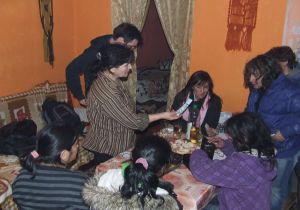
Pilot projects in four different European Union Member States aimed to promote small-scale savings among low-income households. The Hungarian SIMS project implemented, tested and compared three different financial, educational and development methods: CAF, Esélykassza and IDA. As part of this, we explored the possibilities for adapting the CAF method, which was previously unknown in Hungary.
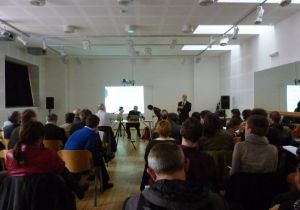
As part of the programme, we developed policy recommendations in various fields important for Roma integration (project support services, local economic development, financial development and settlement clearance programmes). The programme included workshops where the draft documents were put forward for discussion; the finalised documents, taking into account the feedback received, were then forwarded to policy-makers.
The aim of the programme was to strengthen financial awareness and more systematic budgeting in low-income households. The programme was based on the IDA method, which is popular in the United States: participants saved money on a monthly basis in their own bank accounts, and this was matched by a grant of the same amount, helping them to achieve their savings goals. A condition for receiving the grant was participation in the financial training sessions that formed part of the programme.

2008 August 31 — 2010 March 31
As part of the research, we examined whether developments funded by domestic and European Union resources had a noticeable positive impact on the opportunities of local residents, particularly in relation to child poverty. Summarising the results of case studies conducted in 15 localities as part of the methodology, we analysed projects implemented primarily in the field of public education in terms of project types, problems encountered during implementation and effectiveness.
2008 October 31 — 2009 November 30
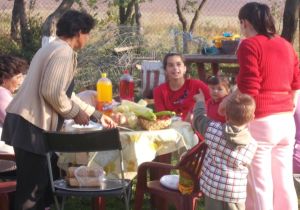
The aim of the Opportunity Fund (Esélykassza) programme was to develop and test an approach – previously unused in Hungary – that combines financial, educational and development methods, with a view to strengthening the financial literacy and more systematic household management of households living in extreme poverty in small settlements. The programme was implemented by Autonómia, with Mikrohitel Zrt. involved in the management of the financial activities.
2004 December 31 — 2009 November 30
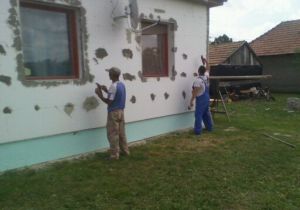
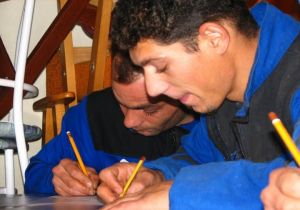
The BRIDGE project was implemented with the support of the EQUAL Community Initiative in Borsod-Abaúj-Zemplén County, in the Cserehát region. Its aim was to help long-term unemployed local residents, primarily of Roma origin, gain access to vocational training and employment opportunities, whilst also improving the housing conditions of needy families living in the region. As part of the project, 50 people obtained National Qualifications Register (OKJ) qualifications and the homes of 90 disadvantaged families were renovated.
2001 December 31 — 2004 November 30
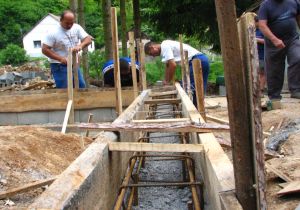
The aim of the project, implemented under the EQUAL programme, was to help the Roma population of the Encs micro-region re-enter the labour market, to create and develop the conditions necessary for their long-term employment, and to prevent and combat ethnic discrimination. The programme focused on three localities and was primarily aimed at Roma adults with low levels of education who were long-term unemployed.
2005 November 30 — 2008 November 30
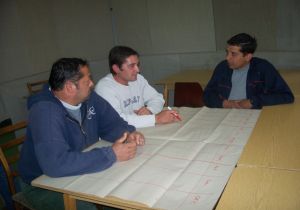
In the project in Bonyhád, we tested the IDA (Individual Development Account) method, which aims to strengthen financial awareness and planning in low-income households. Participants who saved regularly each month into their own bank accounts received a so-called supplementary grant at the end of the savings period, and also took part in training sessions designed to improve their financial and legal knowledge.
Autonómia Alapítvány
1137 Budapest, Pozsonyi út 14. II/9.
Telefon: +36 70 491 1033
Email: autonomia@autonomia.hu
Adószámunk: 19022091-1-41
Bankszámlaszámunk: 11600006-00000000-80724009




1990 – 2026 © Autonómia Alapítvány