
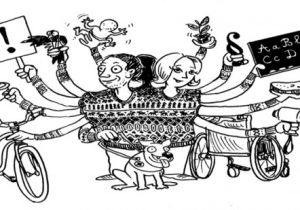
The overarching objective of the EEA and Norwegian Civil Society Fund (NCTA) was to “support the development of civil society in Hungary and strengthen its participation in shaping social justice, democracy and sustainable development.” To this end, the Fund provided support for projects developed across seven thematic areas, of which Autonómia was responsible for the themes of empowering socially vulnerable groups and the welfare services provided to them.

The Swiss–Hungarian Civil Society and Scholarship Fund operated between 2012 and 2015, focusing specifically on strengthening the civil society sector and supporting disadvantaged students. Over the course of three years, 111 projects were implemented with funding of more than 1.3 billion forints: of the 102 civil society projects supported, 67 were in the field of social services and 35 dealt with environmental protection. Under nine scholarship programmes, 679 disadvantaged students received support.
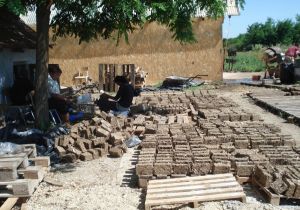
We launched this service as a complement to our ‘EU Funds for Roma Integration’ project development programme, with the aim of facilitating the successful implementation of projects submitted through it. The service consisted of two elements: mentoring support and – where necessary – supplementary support. We made access to the service conditional on meeting a total of eight criteria.
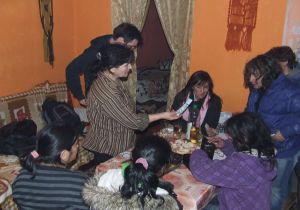
2011 December 31 — 2013 October 31
Pilot projects in four different European Union Member States aimed to promote small-scale savings among low-income households. The Hungarian SIMS project implemented, tested and compared three different financial, educational and development methods: CAF, Esélykassza and IDA. As part of this, we explored the possibilities for adapting the CAF method, which was previously unknown in Hungary.

The aim of the programme was to strengthen financial awareness and more systematic budgeting in low-income households. The programme was based on the IDA method, which is popular in the United States: participants saved money on a monthly basis in their own bank accounts, and this was matched by a grant of the same amount, helping them to achieve their savings goals. A condition for receiving the grant was participation in the financial training sessions that formed part of the programme.
Autonómia Alapítvány
1137 Budapest, Pozsonyi út 14. II/9.
Telefon: +36 70 491 1033
Email: autonomia@autonomia.hu
Adószámunk: 19022091-1-41
Bankszámlaszámunk: 11600006-00000000-80724009




1990 – 2026 © Autonómia Alapítvány