

Our Eltáv programme, run in partnership with the Katona József Theatre, aimed to strengthen and support the community living in the Szúcs mining settlement. The project launched theatre education sessions involving both children from the settlement and students from Budapest. For the adults, alongside arts and community programmes, a financial development programme was launched, house renovations were carried out using donations, and community spaces were refurbished with corporate support.
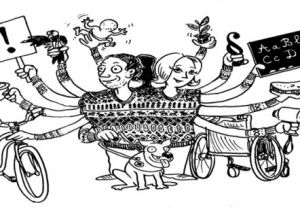
The overarching objective of the EEA and Norwegian Civil Society Fund (NCTA) was to “support the development of civil society in Hungary and strengthen its participation in shaping social justice, democracy and sustainable development.” To this end, the Fund provided support for projects developed across seven thematic areas, of which Autonómia was responsible for the themes of empowering socially vulnerable groups and the welfare services provided to them.
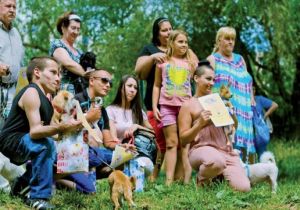
The Swiss–Hungarian Civil Society and Scholarship Fund operated between 2012 and 2015, focusing specifically on strengthening the civil society sector and supporting disadvantaged students. Over the course of three years, 111 projects were implemented with funding of more than 1.3 billion forints: of the 102 civil society projects supported, 67 were in the field of social services and 35 dealt with environmental protection. Under nine scholarship programmes, 679 disadvantaged students received support.

2008 November 30 — 2009 October 31
Autonómia, the Nevelők Háza Association in Pécs and their corporate partners implemented a corporate social responsibility (CSR) project in which, rather than corporate donations, the focus was on the company’s own micro-environment and its problems, and the direction of their CSR activities was chosen from a broader perspective and in collaboration with the company’s employees.
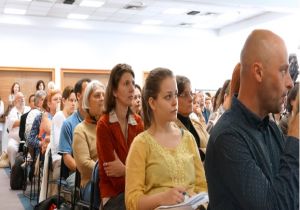
2010 March 31 — 2014 April 30
The aim of this programme, co-financed by the European Social Fund, was to mitigate the deepening, reproduction and territorial spread of poverty, as well as to promote the integration of those living in extreme poverty.
The programme sought to achieve this by strengthening local community ties, tailoring social, health and other human services to local needs, and involving the local population.
Autonómia Alapítvány
1137 Budapest, Pozsonyi út 14. II/9.
Telefon: +36 70 491 1033
Email: autonomia@autonomia.hu
Adószámunk: 19022091-1-41
Bankszámlaszámunk: 11600006-00000000-80724009




1990 – 2026 © Autonómia Alapítvány