

The overarching objective of the EEA and Norwegian Civil Society Fund (NCTA) was to “support the development of civil society in Hungary and strengthen its participation in shaping social justice, democracy and sustainable development.” To this end, the Fund provided support for projects developed across seven thematic areas, of which Autonómia was responsible for the themes of empowering socially vulnerable groups and the welfare services provided to them.
2001 December 31 — 2004 November 30
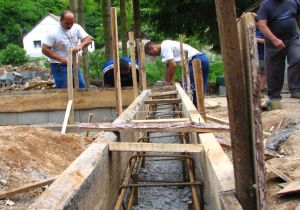
The aim of the project, implemented under the EQUAL programme, was to help the Roma population of the Encs micro-region re-enter the labour market, to create and develop the conditions necessary for their long-term employment, and to prevent and combat ethnic discrimination. The programme focused on three localities and was primarily aimed at Roma adults with low levels of education who were long-term unemployed.

2008 August 31 — 2010 March 31
As part of the research, we examined whether developments funded by domestic and European Union resources had a noticeable positive impact on the opportunities of local residents, particularly in relation to child poverty. Summarising the results of case studies conducted in 15 localities as part of the methodology, we analysed projects implemented primarily in the field of public education in terms of project types, problems encountered during implementation and effectiveness.
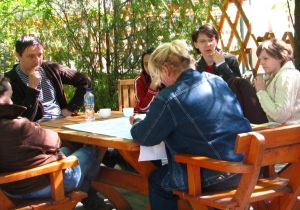
The programme was launched with the aim of ensuring that European Union funds earmarked for Roma integration reach the regions where Roma people live. We developed grant applications locally with Roma minority local authorities, civil society organisations and local communities that responded to our call for proposals. We supported our winning partners through mentoring and additional support.
A hundred proposals were submitted, of which forty were successful, totalling five million euros.

2004 December 31 — 2009 November 30
The BRIDGE project was implemented with the support of the EQUAL Community Initiative in Borsod-Abaúj-Zemplén County, in the Cserehát region. Its aim was to help long-term unemployed local residents, primarily of Roma origin, gain access to vocational training and employment opportunities, whilst also improving the housing conditions of needy families living in the region. As part of the project, 50 people obtained National Qualifications Register (OKJ) qualifications and the homes of 90 disadvantaged families were renovated.

2010 March 31 — 2014 April 30
The aim of this programme, co-financed by the European Social Fund, was to mitigate the deepening, reproduction and territorial spread of poverty, as well as to promote the integration of those living in extreme poverty.
The programme sought to achieve this by strengthening local community ties, tailoring social, health and other human services to local needs, and involving the local population.
Autonómia Alapítvány
1137 Budapest, Pozsonyi út 14. II/9.
Telefon: +36 70 491 1033
Email: autonomia@autonomia.hu
Adószámunk: 19022091-1-41
Bankszámlaszámunk: 11600006-00000000-80724009




1990 – 2026 © Autonómia Alapítvány